
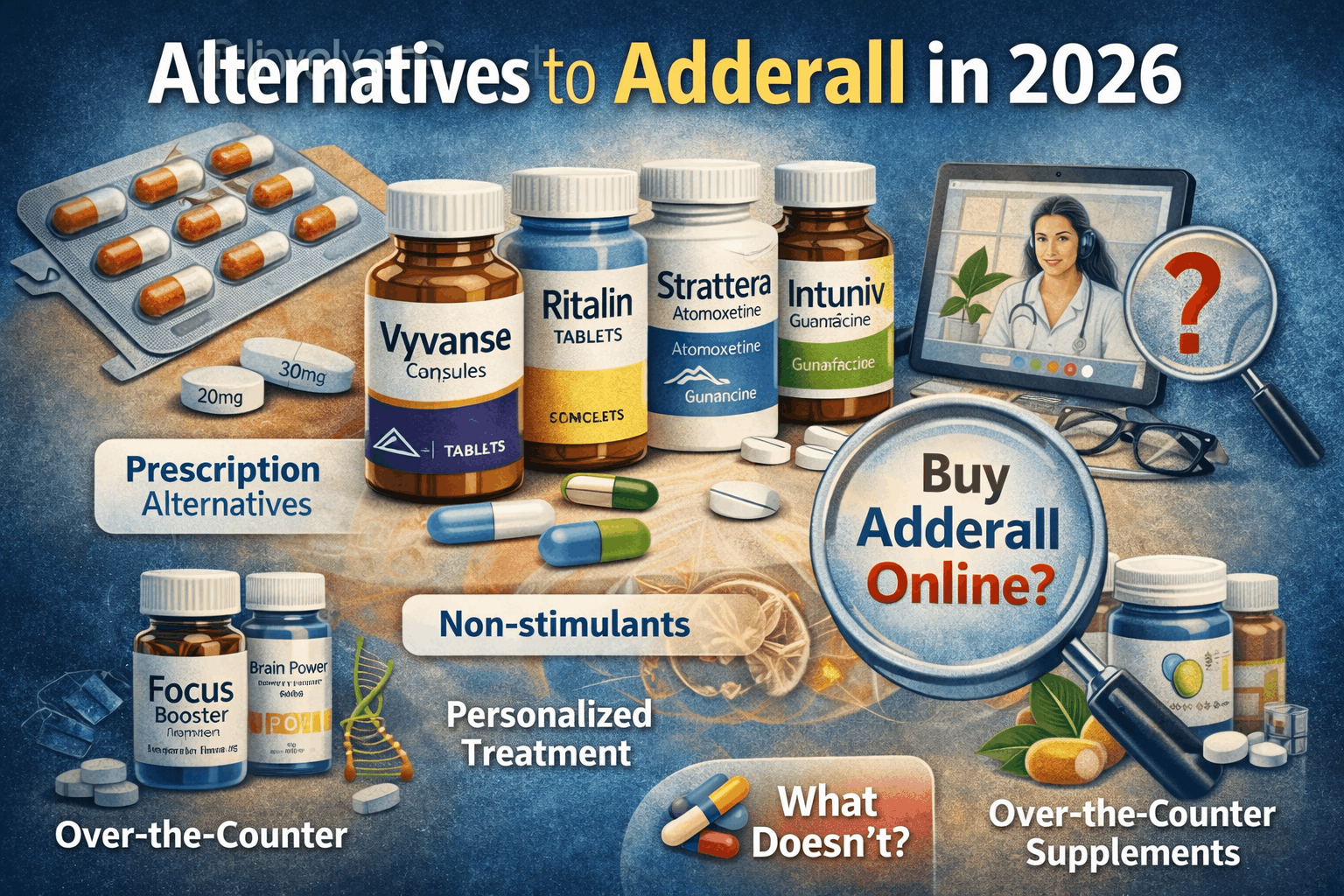
Adderall has long been one of the most prescribed medications for ADHD. For many people, it improves focus, reduces impulsivity, and helps with daily functioning. But in 2026, more patients than ever are searching for Adderall alternatives.
Why? Some experience side effects. Others face supply issues, cost concerns, or simply want an option that better fits their body and lifestyle. The good news is that ADHD treatment has evolved — and there are now several effective alternatives.
Let’s walk through what works, what’s new, and what you should know.
Why People Are Looking for Alternatives to Adderall
Several trends are driving the search:
- Side effects like anxiety, appetite loss, or sleep problems
- Medication shortages affecting availability in some areas
- Concerns about dependence or misuse
- Desire for longer-lasting or smoother symptom control
- Co-existing conditions (like anxiety or tics) that make Adderall less ideal
ADHD treatment is not one-size-fits-all. A medication that works great for one person may not feel right for another.
Prescription Stimulant Alternatives
These medications are still stimulants, but they differ in how they’re released, how long they last, and how smoothly they work.
Vyvanse (Lisdexamfetamine)
Vyvanse is often the first alternative doctors suggest.
Why it’s trending:
- It’s a prodrug, meaning the body converts it into its active form gradually
- Provides long, steady symptom control
- May have lower misuse potential compared to some short-acting stimulants
Many patients report fewer “ups and downs” during the day compared to Adderall.
Ritalin, Concerta & Other Methylphenidates
These medications use a different stimulant base than Adderall.
Examples:
- Ritalin (short-acting)
- Concerta (long-acting)
- Focalin (dexmethylphenidate)
Why they’re used:
- Some people respond better to methylphenidate than amphetamine-based meds
- Different release formulas allow tailored symptom coverage
- Often preferred if Adderall causes moodiness or jitteriness
Switching stimulant classes can make a surprising difference.
Non-Stimulant Prescription Alternatives
These are especially important for people who:
- Can’t tolerate stimulants
- Have anxiety or sleep issues
- Have a history of substance misuse
- Need 24-hour symptom support
Strattera (Atomoxetine)
Strattera is FDA-approved for ADHD and works on norepinephrine, not dopamine.
Pros:
- Not a controlled substance
- Lower risk of dependence
- Can help with anxiety alongside ADHD
Cons:
- Takes several weeks to work
- Doesn’t provide the same rapid focus boost as stimulants
Off-Label Medication Options
Doctors sometimes prescribe other medications when first-line treatments don’t work well.
Wellbutrin (Bupropion)
An antidepressant that affects dopamine and norepinephrine.
Why it’s used:
- May help ADHD and depression together
- Less risk of weight gain or sexual side effects than some antidepressants
- Not a stimulant
It’s not officially approved for ADHD, but some adults find it helpful.
Modafinil (Provigil)
A wakefulness medication sometimes used off-label for attention and alertness.
It’s not a standard ADHD treatment, but may be considered in special cases under close supervision.
Why “Natural Adderall Alternatives” Are Trending
Searches for over-the-counter Adderall alternatives have skyrocketed — but here’s the reality:
No supplement can replicate prescription stimulant effects.
Some commonly discussed options include:
- Omega-3 fatty acids
- L-theanine
- Rhodiola rosea
- Ginseng
- Caffeine + L-theanine combinations
These may support energy or focus slightly, but they don’t treat ADHD at a clinical level. They work best as support tools, not replacements.
How Doctors Choose the Right Alternative
Choosing a replacement for Adderall depends on:
- Symptom type (inattention vs. hyperactivity vs. impulsivity)
- Side effect history
- Sleep patterns
- Anxiety or mood disorders
- Age
- Work or school schedule
- Insurance coverage
Often, it takes trial and adjustment to find the best match.
Common Adderall Dosages
When discussing alternatives, many readers also want to understand how Adderall itself is typically prescribed.
Two commonly prescribed strengths are Adderall 20mg and Adderall 30mg, especially in extended-release Adderall(XR) formulations. These dosages may be used for adolescents or adults depending on symptom severity, response to treatment, and individual tolerance.
However, ADHD medication dosing is highly personalized. A dose that works well for one person may be too strong or too weak for another. Doctors usually start with a lower dose and adjust gradually to balance benefits and side effects.
Never adjust your dose on your own — and avoid any source offering Adderall 20mg or 30mg without a prescription, as improper dosing can increase the risk of:
- Anxiety or heart-related side effects
- Sleep disruption
- Appetite suppression
- Dependence or misuse
If your current dose doesn’t feel right, your prescriber can help you explore adjustments or alternatives safely.
Behavioral and Lifestyle Therapies Matter More Than Ever
Medication is just one part of ADHD treatment in 2026.
Evidence strongly supports combining medication with:
- Cognitive Behavioral Therapy (CBT) for ADHD
- Coaching and organizational skills training
- Exercise (shown to improve executive function)
- Sleep optimization
- Digital tools and reminder systems
For some people with mild ADHD, these strategies significantly reduce the need for higher medication doses.
What to Do If Adderall Isn’t Working for You
Don’t stop suddenly — that can cause fatigue, mood changes, and brain fog.
Instead:
- Talk to your prescribing doctor
- Describe specific side effects or concerns
- Track when symptoms are worst during the day
- Ask about switching stimulant classes or trying a non-stimulant
ADHD treatment is a long-term partnership, not a one-time decision.
FAQ: Adderall Alternatives
What can I take instead of Adderall for ADHD?
Common alternatives to Adderall include Vyvanse, Ritalin, Concerta, Strattera (atomoxetine), guanfacine, and clonidine. Some are stimulants, while others are non-stimulant medications. The best choice depends on symptoms, side effects, and medical history.
Can I buy Adderall online legally?
You can only buy Adderall online legally with a valid prescription from a licensed healthcare provider. Legitimate telehealth platforms may prescribe and ship medication through regulated pharmacies. Websites selling Adderall without a prescription are unsafe and illegal.
Is Adderall 20mg or 30mg a normal dose?
Yes, Adderall 20mg and 30mg are commonly prescribed strengths, especially in extended-release forms. However, ADHD dosing is individualized. A doctor determines the safest and most effective amount based on age, symptoms, and response to treatment.
What is the safest alternative to Adderall?
There isn’t one “safest” option for everyone. Non-stimulant medications like Strattera or guanfacine may be preferred for people with anxiety, heart concerns, or a history of substance misuse. A healthcare provider can help choose the right option.
Do Adderall alternatives work as well?
Some people respond just as well — or even better — to alternatives like Vyvanse or methylphenidate-based medications. Others do well with non-stimulants. Effectiveness varies from person to person.

Leave a Reply